Reverse Engineering Solution
- Published inResearch & Development
- Jun 27, 2024
- 2.64 Min
In today’s fast-paced industrial and technological landscape, companies are constantly seeking ways to optimize product development and improve existing systems. One of the most effective strategies to achieve this is through a reverse engineering solution. This approach allows businesses to analyze, replicate, and enhance products or components, ultimately saving time, reducing costs, and fostering innovation.
Reverse engineering is the process of deconstructing an existing product or system to understand its design, functionality, and operation. Unlike traditional engineering, which starts from concept to product, reverse engineering works backward, starting from the finished product. This methodology is widely applied across industries such as manufacturing, automotive, aerospace, electronics, and software development.
Understanding Reverse Engineering Solutions
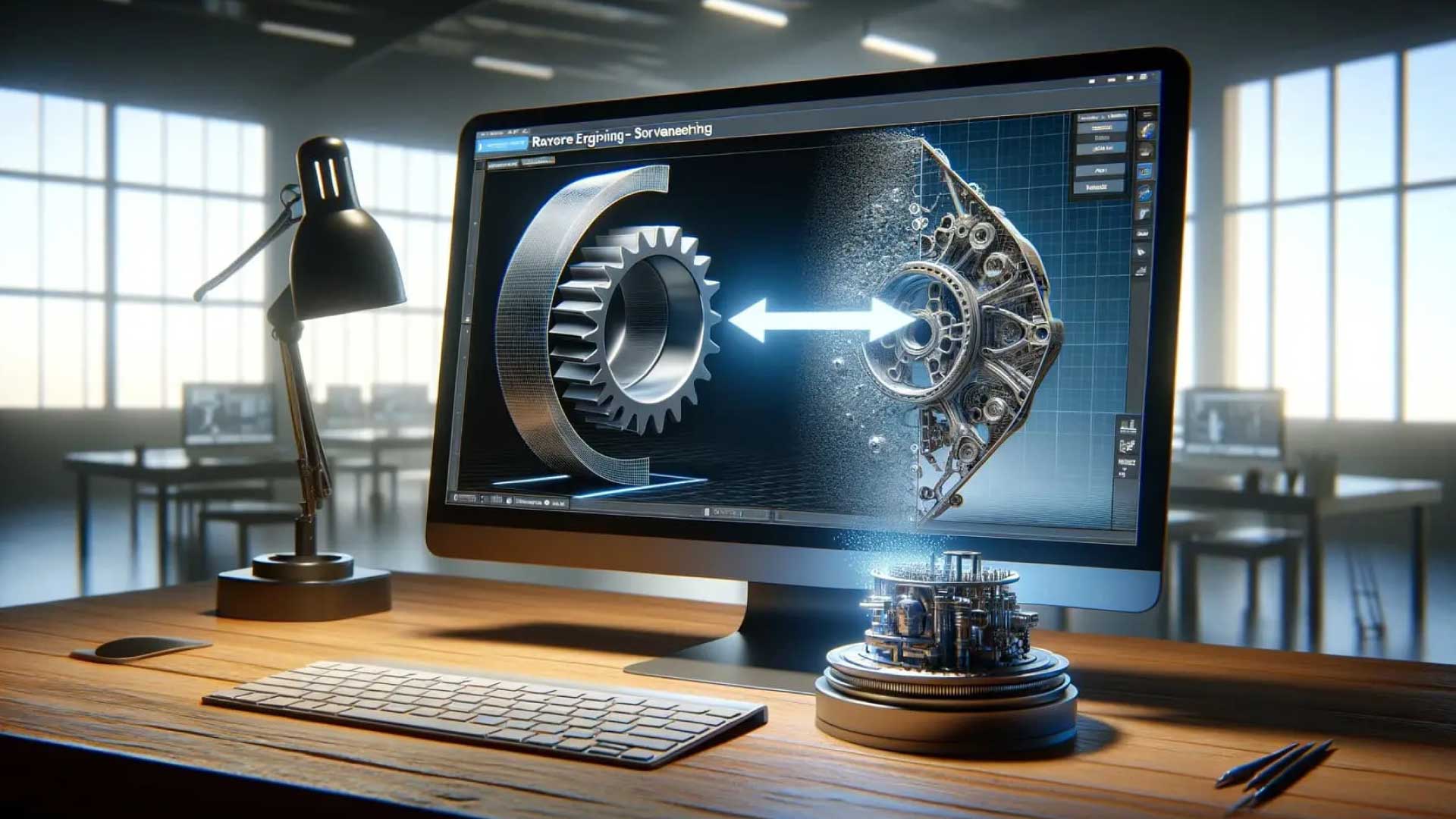
A reverse engineering solution involves a structured approach to analyzing a product to identify its materials, components, and processes. Companies often use this technique for several purposes, including improving product performance, creating compatible replacements, or gaining insights into competitor products. The process typically begins with detailed observation and data collection. Advanced tools like 3D scanners, CAD (Computer-Aided Design) software, and digital modeling are often employed to capture precise measurements and geometries.
For manufacturing and industrial sectors, reverse engineering solutions are crucial for extending the life cycle of machinery. By analyzing worn-out or obsolete parts, engineers can recreate components that are no longer available in the market. This not only reduces downtime but also ensures continuity in production without the high costs of custom manufacturing.
Reverse engineering is also essential in the electronics and software sectors. Engineers can decompile software or analyze hardware to detect flaws, security vulnerabilities, or improve existing systems. For example, in electronics, analyzing a PCB (Printed Circuit Board) through reverse engineering can help replicate or upgrade devices with better efficiency and reliability.
Benefits of Implementing Reverse Engineering Solutions
Implementing a reverse engineering solution brings numerous benefits for businesses of all sizes. One of the primary advantages is cost reduction. By analyzing and reproducing critical components instead of designing them from scratch, companies save both time and resources. Additionally, reverse engineering helps in troubleshooting complex problems by providing a clear understanding of how a product functions.
Another key benefit is competitive analysis. By studying competitor products, businesses can gain valuable insights into design innovations, material usage, and performance standards. This information can then be leveraged to improve product offerings or develop unique solutions that stand out in the market.
Reverse engineering also supports customization. Companies often face unique client requirements that off-the-shelf products cannot meet. Through reverse engineering, engineers can modify existing designs to meet specific demands, ensuring functionality while maintaining cost efficiency. Furthermore, it fosters innovation by allowing teams to learn from existing designs, experiment with improvements, and integrate cutting-edge technologies into new products.
Tools and Techniques in Reverse Engineering
Modern reverse engineering solutions rely on advanced tools and techniques to achieve precision and accuracy. 3D scanning technology has revolutionized reverse engineering by providing high-resolution digital models of physical objects. These models can be analyzed, modified, and converted into CAD files for production.
Another widely used technique is metrology, which involves precise measurement of components to capture their dimensions and geometry. Metrology ensures that replicated parts meet the exact specifications of the original product. Finite Element Analysis (FEA) is often used in conjunction with reverse engineering to simulate stress, performance, and durability of reconstructed designs before production.
In software and electronics, reverse engineering solutions involve code decompilation, circuit analysis, and protocol decoding. These methods enable engineers to understand software behavior, repair malfunctioning systems, or develop compatible products without infringing intellectual property.
Applications Across Industries
Reverse engineering solutions have practical applications across a variety of industries. In the automotive sector, engineers use reverse engineering to improve vehicle components, design aftermarket parts, or restore classic cars with obsolete parts. In aerospace, precision reverse engineering ensures that aircraft components meet strict safety and performance standards.
In manufacturing, reverse engineering aids in process optimization, quality control, and the creation of prototypes. Similarly, electronics companies rely on reverse engineering to analyze competitors’ devices, improve product efficiency, and develop next-generation solutions. Even in healthcare, reverse engineering is used for medical device innovation and improving patient-specific implants.
By integrating reverse engineering solutions into their workflow, businesses can achieve a competitive edge while enhancing operational efficiency. It empowers engineers to dissect existing designs, identify areas for improvement, and apply innovations that drive growth and profitability.
Related Industries
Topics