Crash Analysis and Modeling
- Published inDefense & Law Enforcement
- Jun 27, 2024
- 1.5 Min
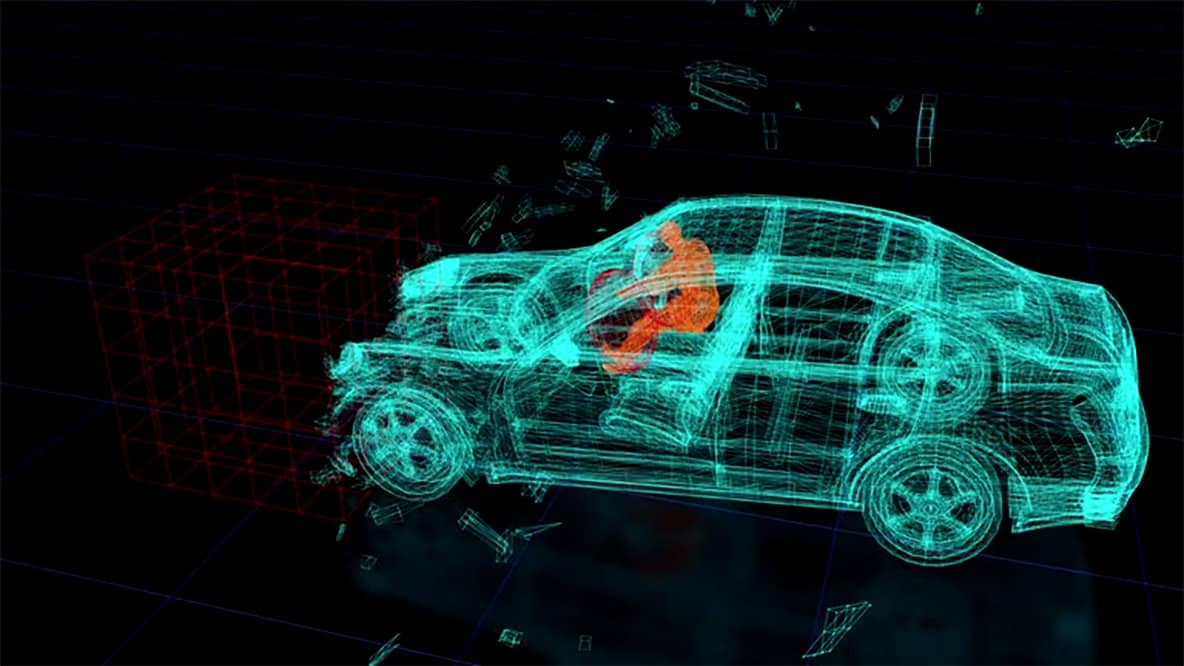
Crash analysis and modeling are critical components in the field of automotive safety, transportation engineering, and structural design. By understanding how vehicles and structures behave under collision conditions, engineers can develop safer vehicles, reduce injuries, and improve overall road safety.
What is Crash Analysis?
Crash analysis involves the systematic study of collisions to determine their causes, dynamics, and effects. It examines factors such as impact speed, angle of collision, vehicle deformation, and energy absorption. Traditionally, crash analysis relied heavily on physical crash tests, which are costly and time-consuming. Today, advanced computer-based simulations have revolutionized the process, allowing engineers to predict crash behavior with remarkable accuracy.
Importance of Crash Modeling
Crash modeling uses computer simulations to replicate real-world collisions. These models help engineers understand the mechanics of accidents without conducting physical tests. By applying finite element analysis (FEA) and other computational techniques, engineers can predict how vehicles deform, how forces are distributed, and how passengers are affected during a crash. This information is crucial for improving safety features such as airbags, crumple zones, seat belts, and side-impact protection.
Methods Used in Crash Analysis
-
Finite Element Analysis (FEA): FEA divides complex structures into small elements and calculates their response to impact. This method helps engineers study stress, strain, and deformation patterns in vehicles.
-
Multibody Dynamics (MBD) Simulation: MBD models treat vehicles and components as interconnected rigid bodies. These simulations focus on motion, force distribution, and vehicle kinematics during collisions.
-
Crash Test Dummies: Physical tests using dummies complement computational models by providing real-life human injury data. Sensors in dummies record forces experienced during a crash.
Applications of Crash Analysis and Modeling
Crash analysis and modeling are not limited to the automotive industry. They are widely used in:
-
Aerospace Engineering: Ensuring aircraft structural integrity during emergency landings or impacts.
-
Railway Safety: Studying train collisions to improve passenger protection and structural design.
-
Civil Engineering: Evaluating the crashworthiness of barriers, guardrails, and bridges.
Benefits of Using Crash Modeling
-
Cost Efficiency: Reduces the need for multiple physical crash tests.
-
Enhanced Safety: Helps design safer vehicles and infrastructure.
-
Data Accuracy: Provides detailed insights into collision mechanics that are hard to obtain experimentally.
-
Time-Saving: Speeds up the vehicle development and safety certification processes.
Crash analysis and modeling are indispensable in modern engineering. They provide the tools needed to understand collisions, improve safety features, and save lives. As simulation technologies advance, the accuracy and effectiveness of crash modeling continue to grow, making it a cornerstone of vehicle safety design and transportation safety research.
Related Industries

Crime Scene Investigation

Forensic investigation

Surveillance System
Digital Twin

Communication Interception

Night Vision Technology
Automated Training Simulator
Crash Analysis and Modeling
Drone Solution
-Technology-1731220387.jpg)
Electronic Warfare & Radio Frequency (RF) Technology

Automated Calibration System

VVIP Security
-1731221881.jpg)
Secure Communications (RF, Optical and Ethernet)

Defense Modernization Software’s
Topics